Suspected poisoning: get urgent help
NHS guidance says to call 999 or go to A&E if you think someone may have swallowed, touched or breathed in something harmful. Call 999 for unconsciousness, stopped breathing, severe breathing difficulty or a seizure. Do not drive yourself to A&E. If you are unsure whether a substance is harmful, call NHS 111.
Do not wait for symptoms, induce vomiting or give food or drink. Follow emergency instructions. This website and its contact form cannot assess exposure or provide emergency help.
Arsenic: Food, Water, Exposure and Health Questions
Arsenic is a naturally occurring element. Its inorganic forms can be highly toxic; the health risk depends on the form, amount and exposure. Use this guide to understand food, drinking-water and workplace concerns, and find reliable UK advice.
Published by UK Domain Trader. Sources checked 3 October 2026. This is an educational summary, not clinically reviewed or a substitute for personal medical advice.
Find practical answers ↓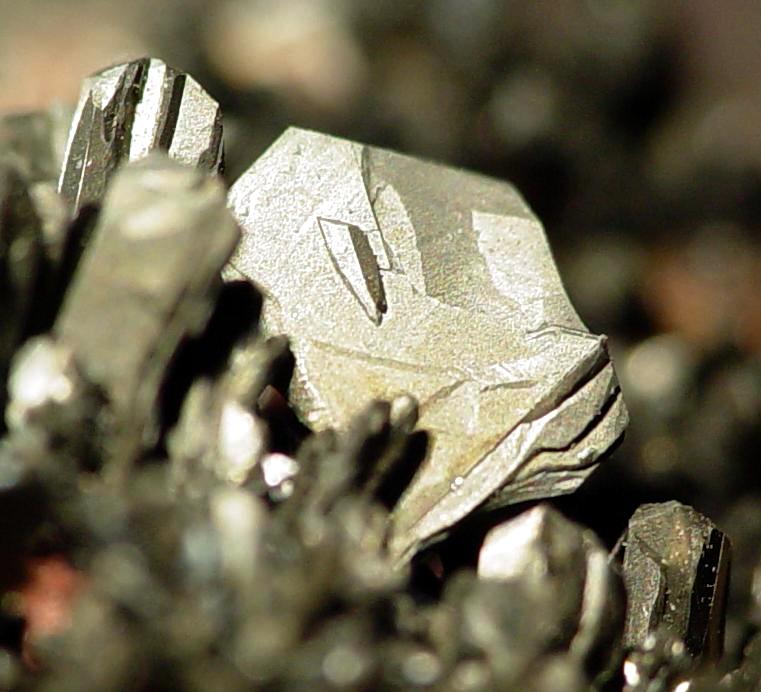
What arsenic is
Arsenic has the chemical symbol As and atomic number 33. It is a metalloid or semi-metal in group 15, period 4 of the periodic table. The metallic form is silver-grey and brittle. It occurs in minerals such as arsenopyrite, realgar and orpiment, and occasionally as native arsenic.
Arsenic also has industrial uses: gallium arsenide is used in semiconductor technology. A mineral specimen, an electronic component and arsenic dissolved in water are different contexts. The credited photograph shows native crystals from the Ronna Mine in the Czech Republic.
Read an arsenic result in context
Inorganic arsenic is generally more toxic than the organic forms commonly found in seafood. Organic here describes chemical form, not organically farmed food. A total arsenic number alone does not tell you which forms were measured.
Before asking someone to interpret a report, gather these details: what was sampled, where and when it was taken, the units, whether the result measures total or particular forms of arsenic, and the full explanatory notes. Keep the complete report.
Check that any comparison uses the same kind of sample and units. A water result, workplace air measurement and human test are not interchangeable. UKHSA explains that health effects depend on amount, exposure route and duration; environmental presence does not itself prove harmful personal exposure.
Food, rice and sensible everyday choices
Rice can take up arsenic from its growing environment, with amounts varying by rice type and growing conditions. The Food Standards Agency says rice can still be enjoyed as part of a healthy, balanced diet. Limits apply to inorganic arsenic in rice and rice products, with stricter levels for foods intended for young children.
Children under five should not be given rice milk as a replacement for breast milk, infant formula or cow's milk. If a child needs a milk alternative because of allergy or intolerance, ask a doctor or dietitian for a suitable choice. This specific advice is different from saying all rice foods should be avoided.
Use the current official guidance rather than an alarming social-media headline. Write down the exact product and the age group involved when asking a health professional a question. UKHSA reports no evidence that eating fish poses a health risk from arsenic; the predominant seafood forms are less harmful than many inorganic compounds.
Water concern? Use this checklist
Contaminated groundwater is an important source of harmful exposure globally, according to WHO. This does not establish that your own tap water is contaminated. Advice needs to concern the supply you actually use.
For a private supply in England or Wales, check registration with the local authority environmental health team. For a mains supply, begin with your water supplier. Have the complete test report ready.
Ask: does the sample represent my drinking water? What was measured and what do the units mean? Is any action required for drinking or cooking? Who will arrange follow-up testing? If treatment is proposed, what evidence shows it works for this supply, and how will performance be checked?
Do not assume an ordinary household filter solves a reported contamination problem. Get supply-specific advice and instructions from the responsible professionals.
Health concerns: prepare for the right conversation
High exposure to inorganic arsenic can cause serious illness. WHO describes vomiting, abdominal pain and diarrhoea after acute poisoning, and links long-term exposure with skin changes and cancers including skin, bladder and lung cancer. Other reported associations include cardiovascular disease. Symptoms alone cannot diagnose the cause.
For a non-urgent concern, prepare a short record for your GP: what happened, when, how contact may have occurred, and any relevant product details or workplace or water reports. Ask whether a test is appropriate, what it measures and how the result would change care. For suspected recent poisoning, use the urgent NHS advice above.
UKHSA explains that urine tests can help assess recent exposure, but seafood intake can raise total urinary arsenic through less harmful organic forms. Hair and nail results are not useful for recent exposure. Interpretation and treatment need qualified healthcare professionals. Do not start a detox or chelation treatment based on an online result.
Workplace and older-material checks
HSE identifies exposure risks in activities including metal refining and smelting, alloy production and microelectronics. Employers must assess and control risks under COSHH, maintain controls and provide training. Occupational health monitoring may also be needed.
Ask your employer or safety representative: which substances are involved? What does the task risk assessment require? How should the controls be used? Who handles a defect or exposure concern? Follow workplace hygiene instructions and report defective equipment. A generic mask recommendation is not a substitute for task-specific protection.
UKHSA notes that sanding or burning wood preserved with inorganic arsenic can release it into the air. If an older material is unidentified, seek identification and safe handling or disposal advice before disturbing it. Keep labels and safety information. This guide provides no methods for extracting arsenic or experimenting with hazardous materials.
Is arsenic a metal or a non-metal?
It is commonly classified as a metalloid or semi-metal. That description reflects properties between those familiar categories. Its chemical symbol is As and its atomic number is 33. For study or classroom work, use the Royal Society of Chemistry's periodic-table entry rather than treating the element's name as interchangeable with every arsenic-containing compound.
Does arsenic in food mean I should stop eating rice?
No. The FSA says rice can be part of a balanced diet. Its specific rice-milk restriction concerns children under five using it as a milk replacement. If you need individual dietary advice, especially for a young child with an allergy, take the product details to a doctor or dietitian rather than removing major foods on your own.
What should I ask about arsenic in my water?
Ask which supply and sampling point the report covers, what the result means and who is responsible for follow-up. Private supplies in England and Wales should be discussed with the local authority's environmental health team. Have the complete report available. A result from another region or a photograph of someone else's test cannot establish the condition of your supply.
Can a test prove that my symptoms are caused by arsenic?
A result needs clinical interpretation alongside the exposure history. UKHSA explains why recent exposure, the sample type and seafood intake can affect interpretation. Ask your clinician what the chosen test measures and what happens next. Do not treat a commercial hair test or a single unexplained number as a diagnosis. If poisoning may have just occurred, use urgent NHS help rather than waiting for a test.
Where can I get reliable advice in the UK?
Use NHS guidance for urgent health decisions, your GP for non-urgent personal concerns, your employer or occupational health team for workplace questions, and the relevant water supplier or local authority for supply concerns. The source links here lead to those organisations' information. Our correction form is for improving the guide; do not send medical records, urgent symptoms or requests for treatment through it.
Independent, and open to better information.
This guide is published by UK Domain Trader. It is an introductory resource, not personalised professional advice or an endorsement by the organisations listed. Links are included to help you find reliable information. No business has paid for an editorial mention in this guide. Know a useful resource, or spotted something that needs correcting? Tell us below.
Research sources and image attribution
- NHS: poisoning · researched 2026-10-03
- RSC: arsenic properties and uses · researched 2026-10-03
- UKHSA: arsenic general information · researched 2026-10-03
- UKHSA: arsenic toxicological overview · researched 2026-10-03
- WHO: arsenic fact sheet · researched 2026-10-03
- FSA: arsenic in rice · researched 2026-10-03
- DWI: private water supply registration · researched 2026-10-03
- HSE: arsenic and you · researched 2026-10-03
Photograph: Rob Lavinsky, iRocks.com / Wikimedia Commons. Original and rights information. CC BY-SA 3.0. Displayed without alteration; the responsive layout may crop its visible area.
MAKE A CONNECTION
A distinctive name.
Your next idea.
arsenic.uk is listed with UK Domain Trader. View the current asking price and purchase options on the marketplace, or send a buying enquiry.
View arsenic.uk ↗Your privacy
UKC LABS LTD, trading as UK Domain Trader, operates this guide. The enquiry form sends your name, email, message and enquiry type to our central inbox so we can respond. These details are not published or sold. Enquiries are retained for up to 365 days unless a longer period is needed to handle an ongoing request or legal obligation. We process enquiries to respond to your request and administer our business; ticking the acknowledgement does not subscribe you to marketing.
We count page requests and useful-link clicks without visitor tracking cookies. Security controls use short-lived pseudonymous rate-limit records, and server security logs may contain IP addresses. To request access, correction or deletion of your information, use the contact form and select correction, or visit UK Domain Trader’s privacy policy. This form is not an emergency or public-service reporting channel.